Wk Hours
Monday to Friday: 7AM - 7PM
Weekend: 10AM - 5PM
The UK peptide market has grown fast. Consequently, researchers and consumers alike now ask a simple question. Are online peptide shops in the UK legal? The answer is not straightforward. It depends entirely on what the peptides are sold for and how they are marketed. This guide explains the legal landscape in Britain and provides practical clarity for anyone buying or selling research peptides.
Peptides are legal to buy, sell, and possess in the UK. However, this applies only to laboratory research . It is illegal to sell, supply, or market unlicensed peptides for human consumption . The distinction rests on a single factor: intended use.
Most research peptides are not controlled substances under the Misuse of Drugs Act 1971. They are generally not psychoactive, so they typically fall outside the Psychoactive Substances Act 2016 . This means possessing them is not itself a crime. What matters is how they are presented and sold.
This is the central rule. A product sold or presented for treating, preventing, or diagnosing a condition in people is a medicinal product . Supplying one without a marketing authorisation from the MHRA is unlawful . Regulation 46 states plainly: “A person may not sell or supply, or offer to sell or supply, an unauthorised medicinal product” .
Breaching this regulation is a criminal offence. On conviction, penalties include an unlimited fine, up to two years imprisonment, or both .
Online peptide shops commonly label products “research use only” or “not for human consumption.” Dr Luke Turnock is a senior lecturer at the University of Lincoln. He explains why this matters: “They put ‘research use only’ or ‘not for human consumption’ on the packaging. And this seemingly evades some of the regulations that we have because you’re not allowed to sell them as medicines, but if you state it’s a research chemical, then the MHRA is going to have a much harder time bringing an enforcement action against you” .
However, this loophole has limits. The MHRA states it “disregards claims that products are for ‘research purposes’ if it is clear that such claims are being used as an attempt to avoid medicines regulations” . If promotional material shows the products are actually unauthorised medicines intended for human use, the agency will take action .
Prescription-only medicines cannot lawfully be advertised to the general public . Using terms like “research peptide,” “biohacking,” or “wellness treatment” will not necessarily avoid medicines advertising rules if the substance is a medicinal product . The substance of what is being promoted matters more than the label attached to it.
Several factors determine whether an online peptide shop operates unlawfully. These indicators help identify problematic vendors.
A shop becomes illegal when it makes claims about treating, preventing, or diagnosing conditions in people. The MHRA is investigating UK clinics making potentially unlawful claims about peptide benefits . A Guardian investigation found clinics advertising BPC-157 for “tissue repair and recovery from injuries” and Thymosin Alpha as something that “boosts immune function” .
Lynda Scammell is Head of Borderline at the MHRA. She explains: “If there is evidence within the promotional material that the products are in fact unauthorised medicines intended for human use, we will take appropriate regulatory action” .
Shops that provide dosage instructions cross a clear line. QuadroPay’s merchant risk guide identifies non-compliant merchants by their claims. These include “injectable,” “for bodybuilding,” or “for healing” and dosage instructions such as “mg per day, injection protocols, cycles, or recommended use.”
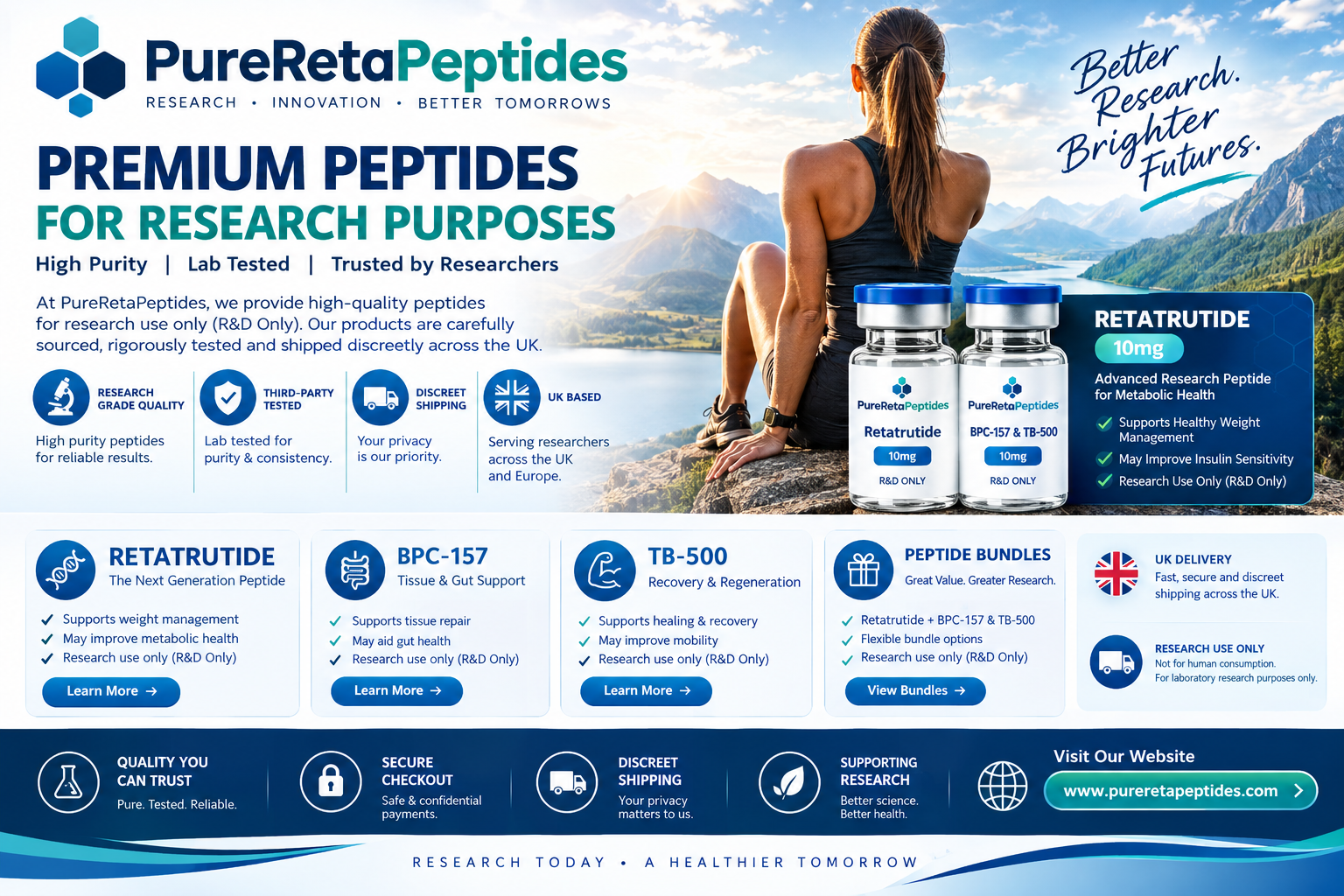
Marketing language reveals a shop’s true intent. Glossy packaging, lifestyle imagery, and influencer endorsements are hallmarks of merchants targeting human consumption rather than research use . The “research use only” label becomes meaningless when the surrounding marketing clearly targets people seeking wellness or performance benefits.
Legitimate online peptide shops follow specific practices. These distinguish compliant operations from those exploiting regulatory gaps.
Legitimate suppliers sell peptides strictly for in-vitro laboratory research. They make no medical or dosing claims . The “research use only” label is not a marketing slogan—it is the basis on which these products are legal to supply .
Compliant shops avoid therapeutic, bodybuilding, anti-ageing, or performance-enhancing claims. They clearly label products “For Research Use Only. Not for human or veterinary use.”
Legitimate suppliers provide certificates of analysis with third-party testing. This documentation demonstrates the compounds are what they claim to be. It also supports the research-use framing.
Despite clear legal boundaries, a grey market thrives. Professor Channa Jayasena of Imperial College London warns the UK has become a “wild west” for experimental peptides . He encounters patients “day in, day out” who are taking these substances .
Jayasena warns of serious risks: “It feels that we’re in the wild west and it feels like we’ve rapidly arrived in a situation of lawlessness when it comes to people normalising the administration of potentially very powerful and sometimes untested peptides and products that could have devastating consequences for their health” .
The problem is regulatory. Jayasena notes the issue “falls between the stools” of regulatory bodies. The MHRA handles medicines regulation. The Advertising Standards Agency has narrow scope. No single body takes overall responsibility .
The British College of Aesthetic Medicine has issued warnings about unregulated peptide injections. Risks include immune or inflammatory reactions, infection, abscess formation, contamination, incorrect dosing, hormonal disruption, and drug interactions .
Dr Mayoni Gooneratne is a BCAM member. She explains: “Peptides may be ‘natural’, but that does not make them automatically safe. The key question is not simply whether something is a peptide. The key questions are: what is the compound, what is the evidence, is it licensed or unlicensed, who is prescribing it, where has it come from, and what safeguards are in place?” .
For regulated healthcare professionals, consequences extend beyond commercial concerns. JMW Solicitors notes that “where there are concerns about the unlawful importation, supply or sale of medicinal products, businesses may also find themselves facing criminal investigation” .
The Proceeds of Crime Act 2002 can become relevant. Account Freezing Orders can be obtained without prior conviction. This can restrict a business’s operating funds during an investigation .
A regulatory issue can escalate. What begins as a medicines-regulation matter may develop into a wider criminal investigation .
If you are a legitimate researcher buying peptides for laboratory work, the law permits your purchase. However, you should follow these principles.
Buy from suppliers with proper documentation. Certificates of analysis should be batch-specific and from identifiable third-party labs.
Avoid suppliers making human-use claims. If a shop markets peptides for healing, performance, or wellness, it operates outside the research-only framework.
Understand that “research use only” has limits. The MHRA disregards this label when evidence shows products are intended for human use .
Buy from UK-based suppliers. Importing peptides for genuine research is treated differently from importing unlicensed medicines for people. Buying domestically avoids customs handling and potential seizure .
Online peptide shops in the UK are legal when they sell strictly for laboratory research. They become illegal when they sell for human consumption or make medicinal claims. The “research use only” label provides legal cover only when it reflects genuine intent. The MHRA disregards this label when evidence shows products are actually intended for human use.
For researchers, the legal path is clear. Buy from suppliers who maintain strict research-only framing. Insist on proper documentation. Avoid vendors making human-use claims. For consumers seeking peptides for personal use, the legal and safety risks are significant. The UK’s regulatory gap means enforcement is inconsistent. As Professor Jayasena warns, “someone’s going to die” if action is not taken .
The law itself is not ambiguous. The Human Medicines Regulations 2012 clearly prohibit supplying unauthorised medicinal products. The challenge lies in enforcement. Until the “research use only” loophole is tightened, the grey market will continue to operate in the space between legal research supply and illegal human consumption.