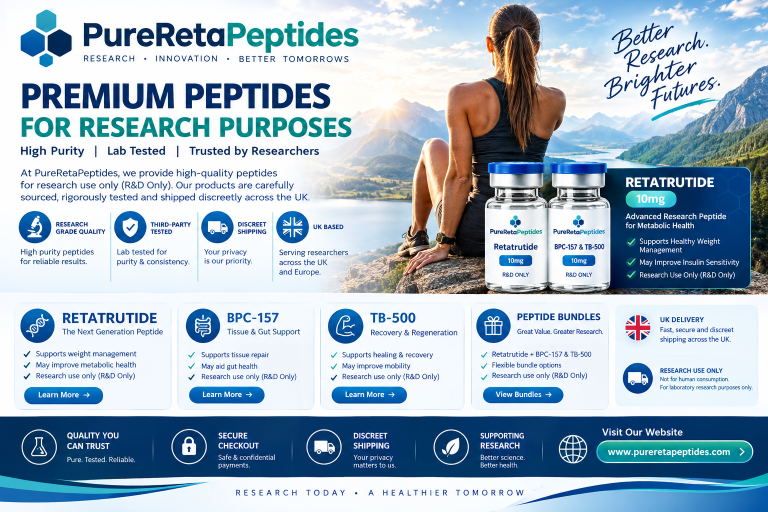
Certified Quality, Uncompromising Science: Retatrutide and Peptide Distribution in the UK
We’re dedicated to providing clear, evidence-based information about peptides, ongoing research, and related healthcare topics for people in the UK. Explore educational resources, learn about current scientific developments, and understand the importance of obtaining any prescription or investigational medicines only through qualified healthcare professionals and legitimate, regulated channels.
Our Retatrutide and research peptides undergo rigorous third-party testing, including HPLC and LC-MS analysis, to verify identity and purity—ensuring uncompromised quality for your laboratory studies.
Fast Delivery
Fast, Secure UK-Wide Delivery
We dispatch all orders promptly with tracked, discreet shipping—ensuring your research materials arrive quickly and safely, so you can start your work without delay.
Best Warranty
100% Satisfaction Guarantee
We stand behind every order with a full satisfaction guarantee. If you’re not completely satisfied with the quality of your research materials, we’ll replace or refund your order—no questions asked.
Retatrutide is an experimental triple-hormone receptor agonist (targeting GIP, GLP-1, and glucagon receptors) currently undergoing clinical evaluation for metabolic health and weight management. UK-based research institutions and pharmaceutical trials focus on evaluating its efficacy, safety profile, and comparative stability against established single- and dual-agonist peptides.
Access & Regulatory Status
Retatrutide is not currently licensed by the Medicines and Healthcare products Regulatory Agency (MHRA) for general prescription or commercial sale in the United Kingdom. It remains restricted to formal clinical trials and authorised laboratory research settings. Individuals interested in participating in research or tracking clinical progress should look to registered UK clinical trial databases and peer-reviewed medical publications.
Would you like details on ongoing UK clinical trial registries or the mechanism of action of triple-agonist peptides?